
Maria Natalia · 2 years and 9 months old
Maria's Story – A Small Heart, A Huge Fight
The story of a little girl for whom "it can't be done" was not the final answer
The biventricular correction was carried out successfully in 2026
Latest medical update: September 2026
Her cardiac journey is not over, but Maria has gained time.
Maria todayMaria’s Life
Maria's Journey - In Pictures
Each photograph tells a part of Maria's story of courage and hope. From the first difficult days to moments of joy, follow the transformation of a little fighter.
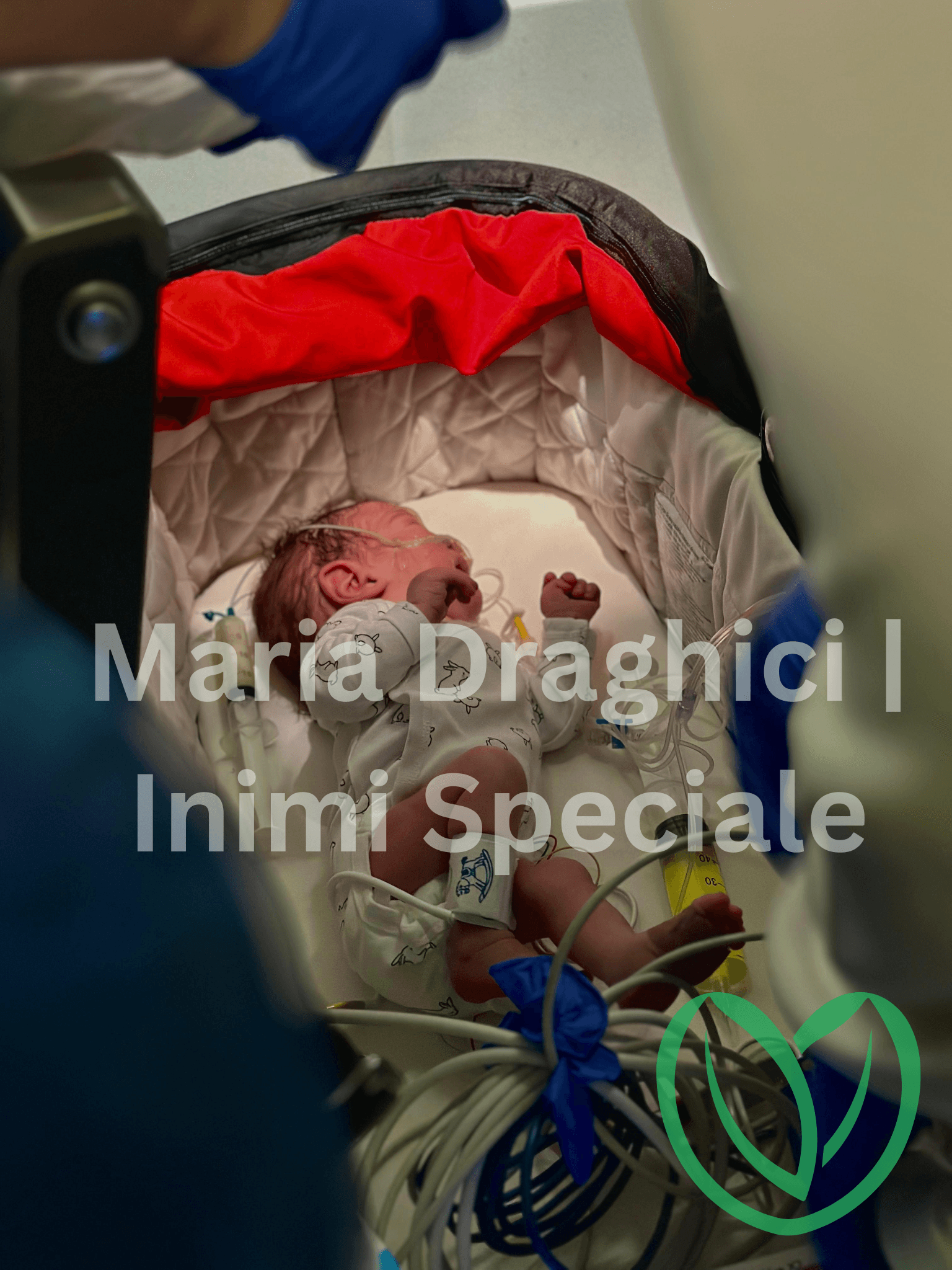
First days
The beginning of a difficult journey - the moment we learned about the heart malformation.
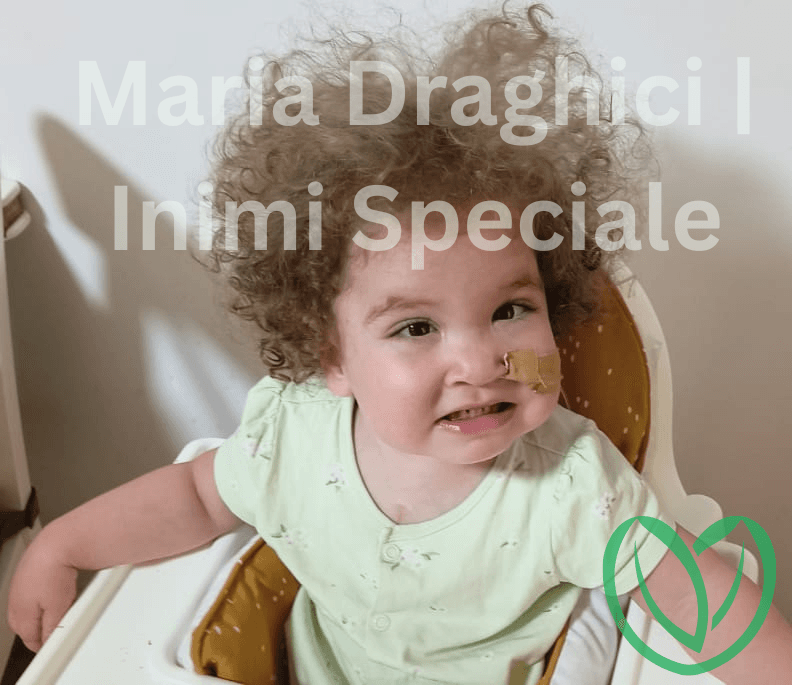
Recent portrait
Maria Natalia, a little fighter with a big heart and a smile that gives us strength to continue.
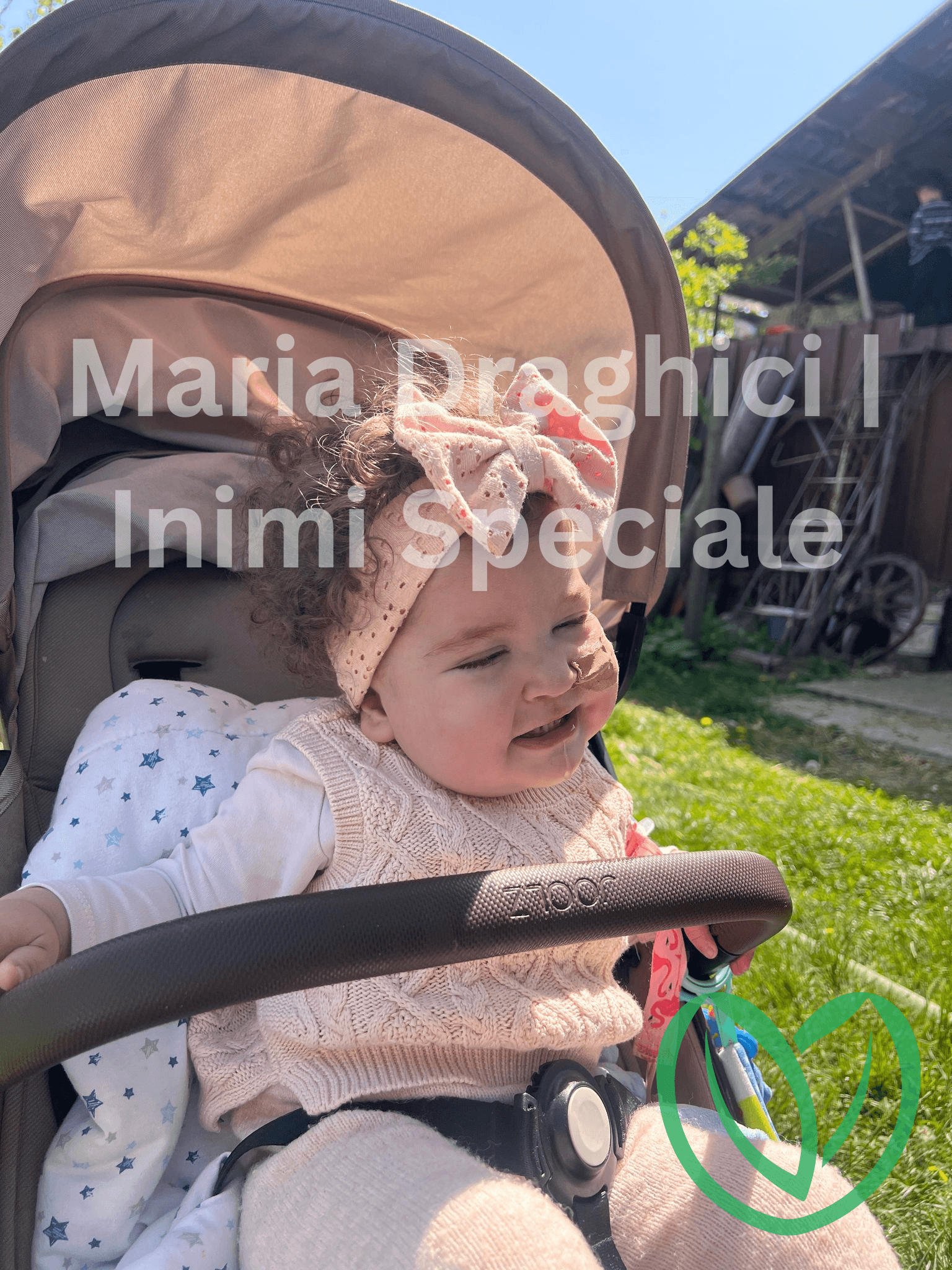
Moments of joy
The smile that reminds us what we fight for - for the joy and innocence of childhood.
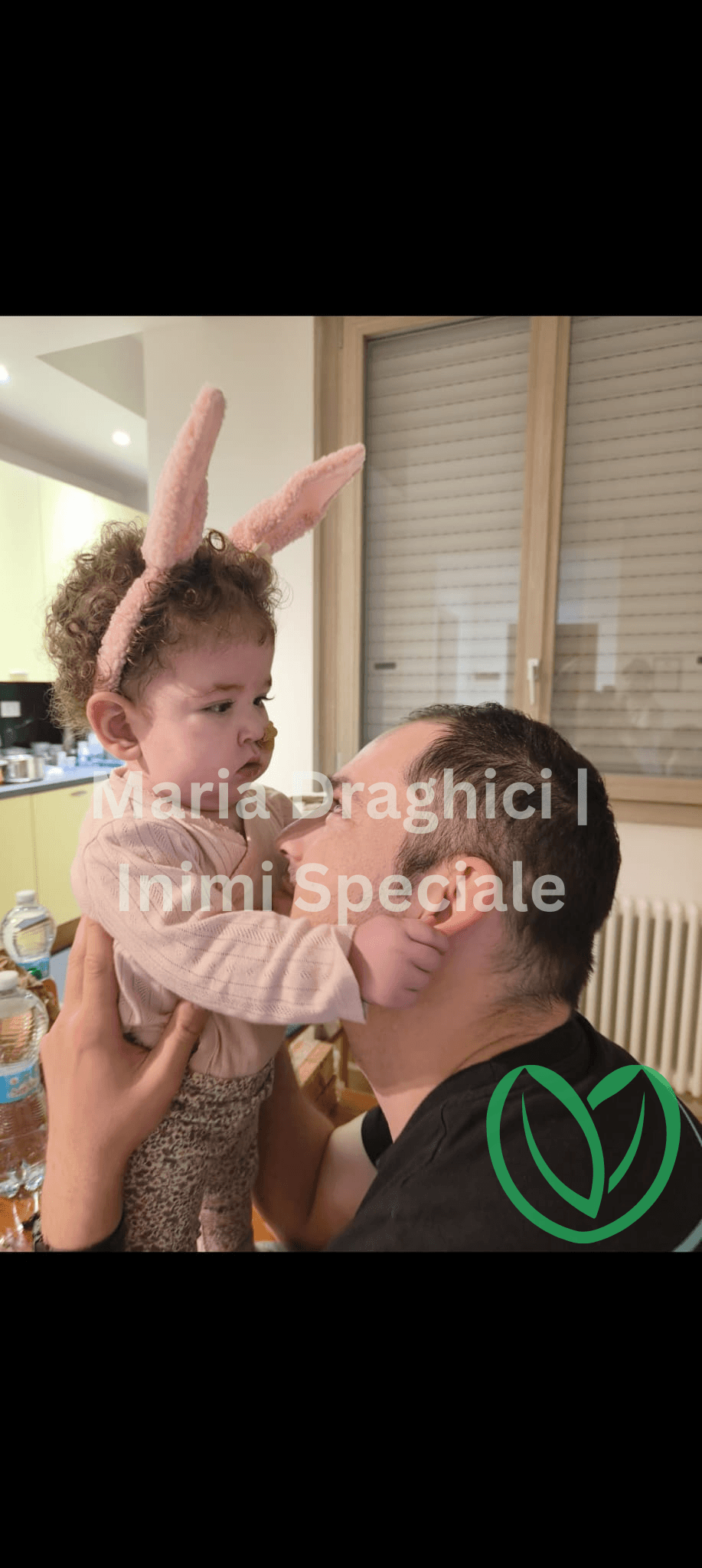
Before Glenn operation
Preparations for the third Glenn operation - a crucial moment in Maria's treatment.
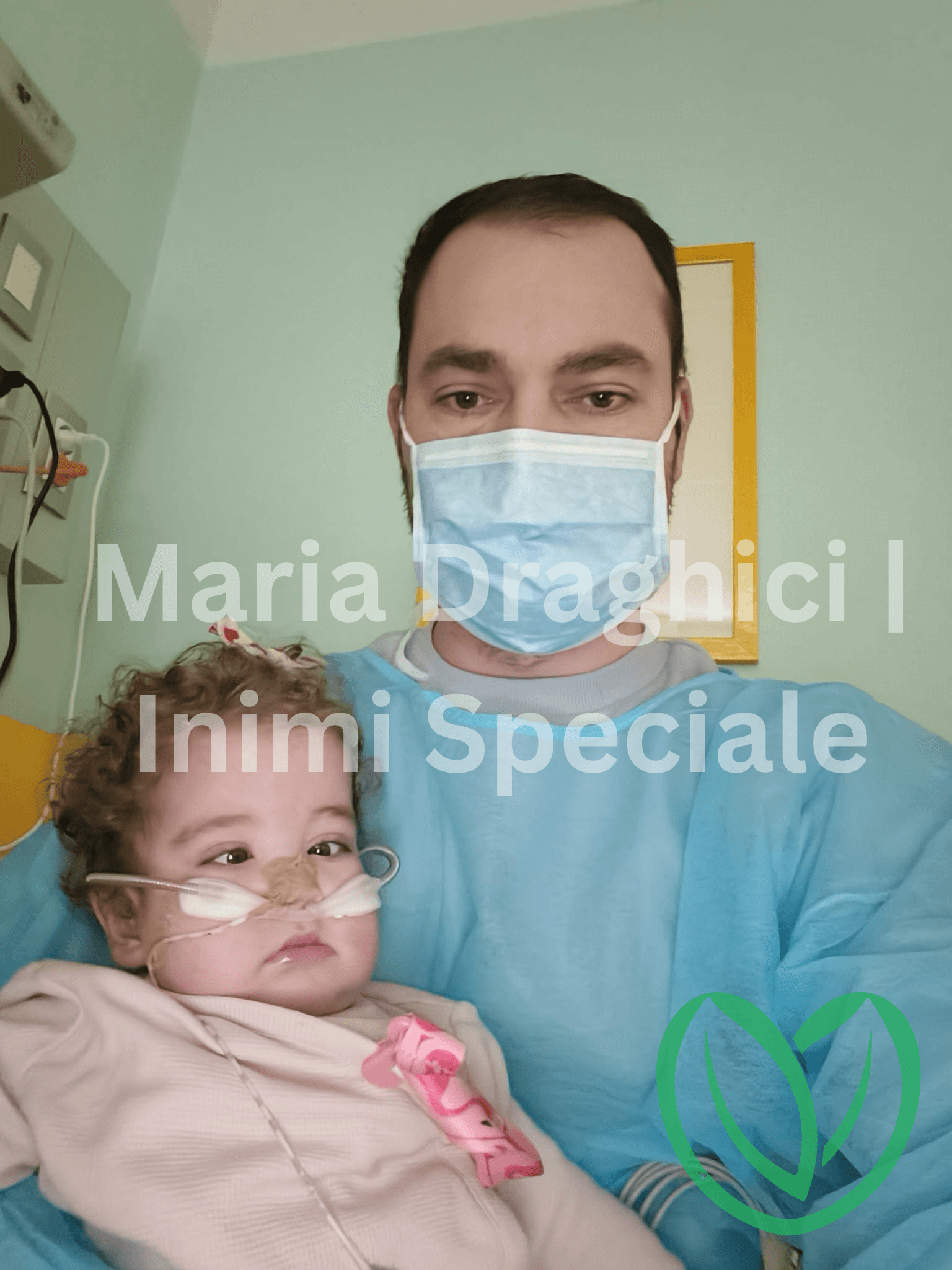
Hospitalization
In the hospital, preparing for the operation that could save her life.
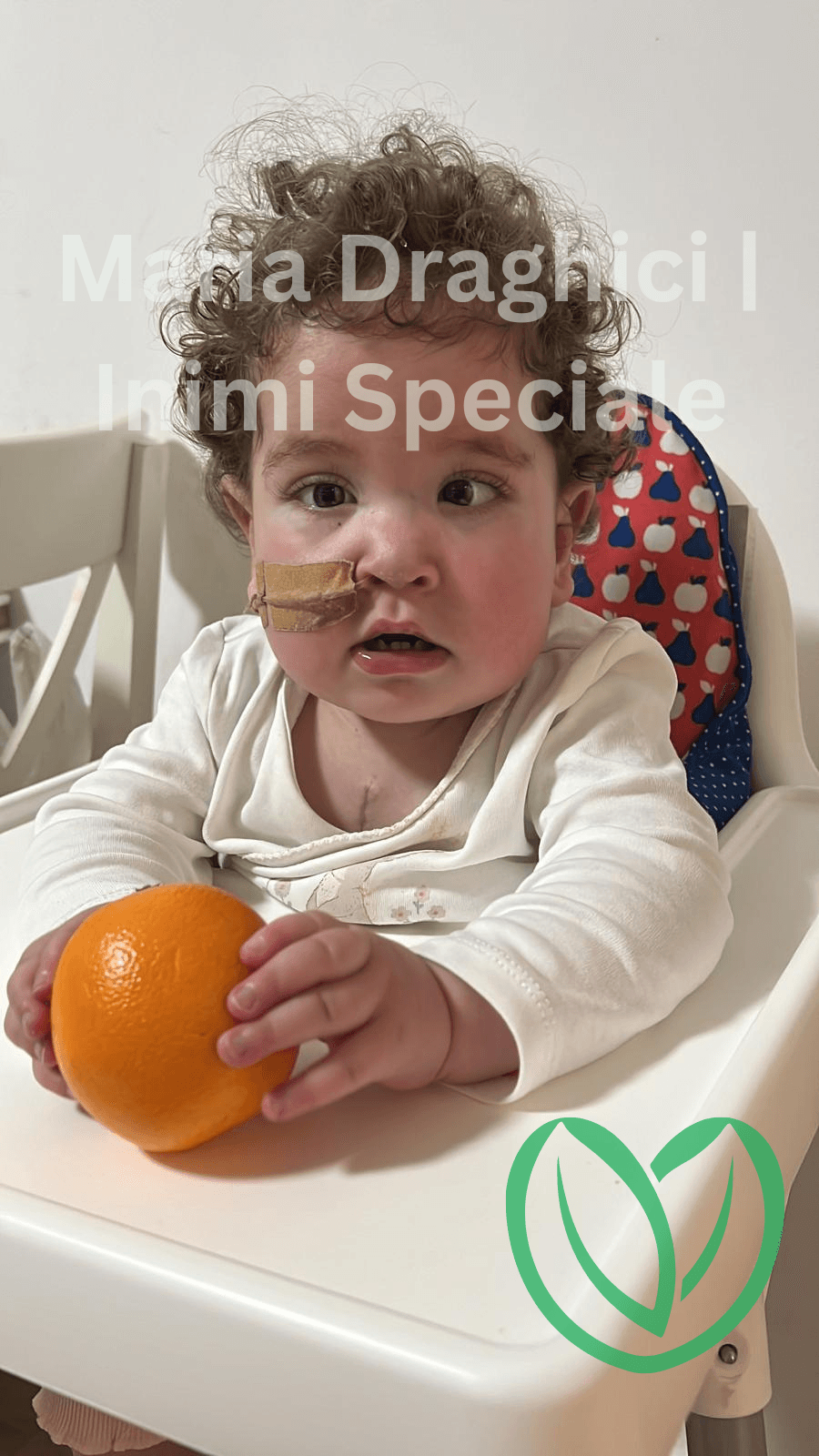
After Glenn operation
After the Glenn operation - the first important step towards recovery.
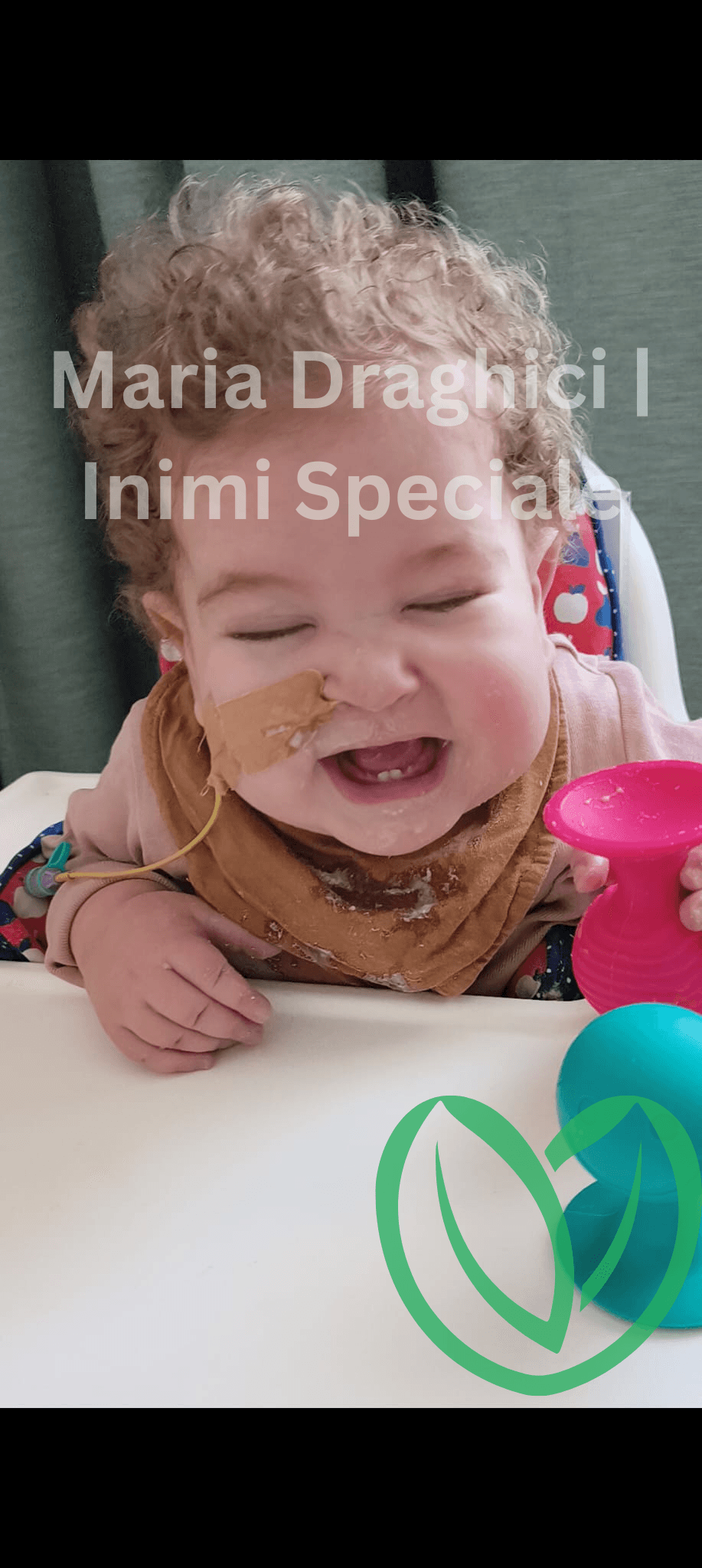
After second operation
Recovery after the second operation - signs of progress and hope.
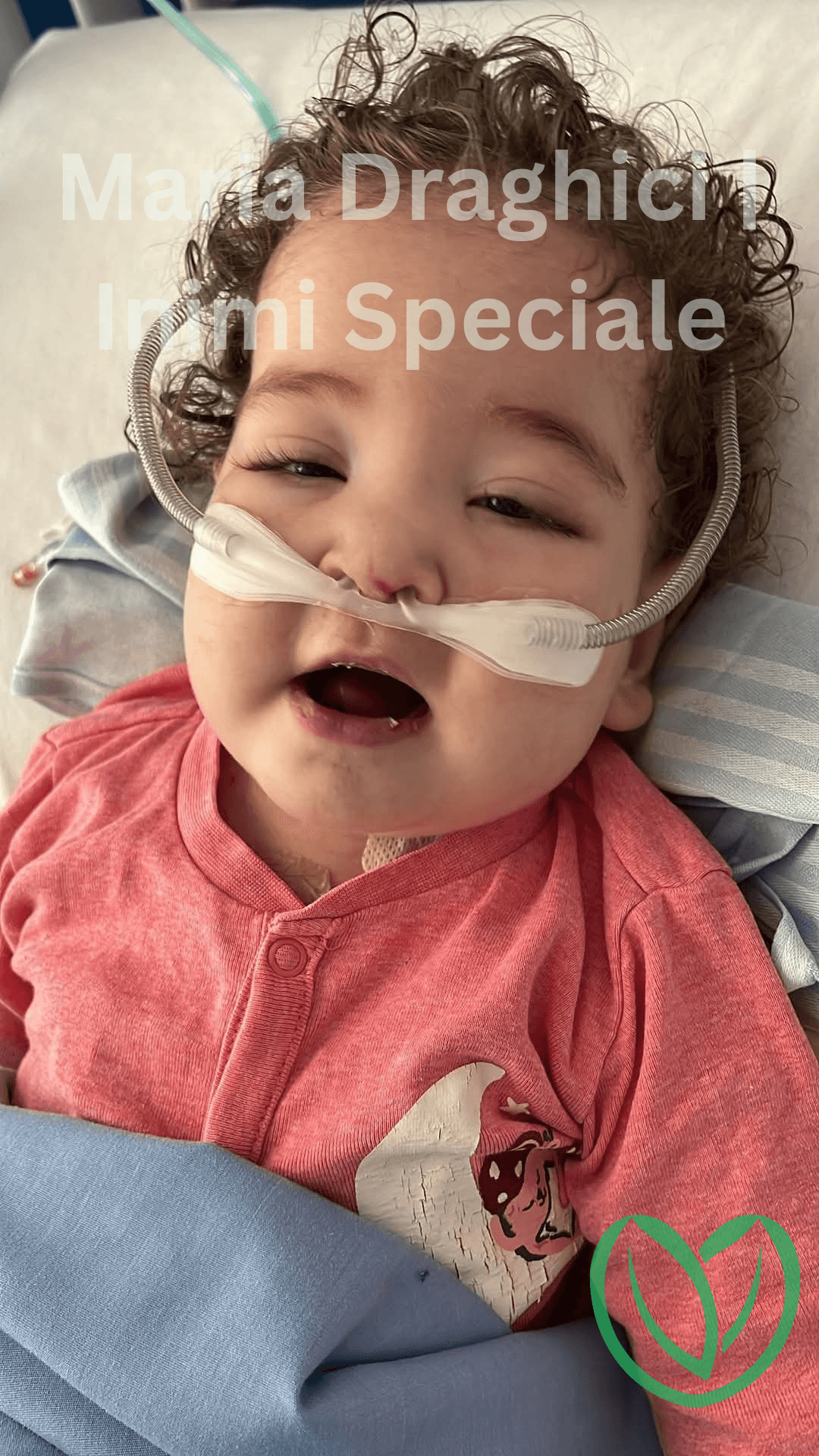
After extubation
A moment of joy - Maria breathing on her own again after extubation.
These images are not just memories - they are proof that miracles happen when we unite our forces. Maria continues to fight with a smile on her face, and with your help, she will have a chance at a normal childhood.
The Beginning
Maria came into the world wanted and loved, in our family where there is also a little boy. The pregnancy was carefully monitored, all tests were done, even genetic ones, and nothing seemed to announce the terrible fight that followed.
At birth, Maria received a 10. But her blue lips and palms, low weight and feeding difficulties raised the first questions. Unfortunately, our concerns were ignored by several doctors, and the initial diagnosis came only 12 days after birth... and it was devastating: Common arterial trunk, a serious heart malformation, incompatible with life without immediate surgical intervention.
A race against time followed to save her life. After refusals and delays in the country, the only real solution was the emergency transfer to Italy, to the San Donato clinic. We are grateful to those in Romania who made that transfer possible and, above all, to the team in Italy, who saved Maria's life through three surgical interventions and established the final diagnosis: pulmonary atresia with ventricular septal defect. Sadly, no more could be done: all the operations were palliative, meant to prolong her life, not to correct her heart.
Meanwhile, following complex genetic analyses, Maria was diagnosed with ZTTK, an extremely rare genetic syndrome, documented only in 2016 and present in less than 250 children worldwide. This syndrome further complicates her fight, making her ineligible for a heart transplant, the final solution following the next palliative operation.
Europe saved Maria's life. We will always be grateful to the doctors and medical staff in Romania and Italy who cared for her: without them, our little girl would have reached neither Boston nor the stage she is at today. At the same time, when all that could still be done for her heart was palliation, we kept looking for a solution that could offer her a different perspective on the future.
The road to Boston
Through our own efforts and with the support of a few close people who guided us, we managed to send Maria's medical documentation to Boston Children's Hospital, a center of excellence recognized worldwide for treating complex cases of pediatric cardiology.
After analyzing the case, the doctors there offered the only real long-term solution:
either a direct biventricular correction (the best option)
or a two-stage plan: a left ventricle growth stimulation operation, followed by complete correction
Decision process
To make this possible, Maria had to reach Boston urgently. Following the discussion with the medical team in mid-April 2025, we were told that the intervention had to take place within 3-6 months, so as not to miss the window of opportunity that could have saved her life.
Thanks to an impressive mobilization and support from people and companies who believed in Maria's chance, we managed to cover the costs of the first intervention, which was scheduled and successfully carried out in September 2025. The second intervention - the biventricular correction - was carried out successfully in 2026.
Update - September 2025
After medical evaluations performed at Boston Children's Hospital, doctors determined that option 1 (direct biventricular correction) is not possible in Maria's case due to insufficient left ventricle size.
Maria successfully underwent the first of two surgeries outlined in option 2 - the left ventricle growth stimulation intervention. This represents the first essential stage of long-term treatment.
Maria's heart was strictly monitored to track the growth of the left ventricle. The second surgery, the biventricular repair, was expected approximately 9 months after the first intervention, depending on the progress and development of the left ventricle.
Maria's treatment does not end with the surgery: a period of recovery and careful monitoring follows, for which your support remains just as important.
Good news - Summer 2026
Maria's first open-heart surgery at Boston Children's Hospital, made possible with your help, was a success. In 2026, Maria returned to Boston for the second stage - the biventricular correction - which was also carried out successfully.
Update - September 2026
The biventricular correction was carried out successfully at Boston Children's Hospital. It is the second major stage of the surgical strategy and the stage we fought for over the years.
Shortly after being discharged in September 2026, Maria returned to the Emergency Department in less than 24 hours with fever and a drop in oxygen saturation, and was readmitted. It is part of a recovery we take as it comes, day by day.
Her cardiac journey is not over. But Maria has gained something extraordinarily important: time to grow, for the monitoring of her heart and for the recovery of the other problems associated with ZTTK syndrome.
We will update this section as soon as we have new information validated by the medical team.
An important period follows: long-term cardiology monitoring, follow-ups in Boston and, in the coming years, another cardiac intervention, at the time recommended by the medical team. In the meantime, we use the time we gained for recovery.
Medical journey
The main stages, from diagnosis to today
Diagnosis and first interventions
Diagnosis 12 days after birth, emergency transfer to Italy, to the San Donato clinic, and the first heart surgeries.
The interventions that stabilized and saved Maria's life
Three surgeries in Italy that saved her life, for which we remain grateful, even though no more than palliation could be done. Added to these were two gastrostomy-related procedures, multiple hospitalizations, investigations and stays in intensive care.
Identifying the Boston option
When all that could still be offered in Europe was palliation, Maria's records reached Boston Children's Hospital, where a two-stage strategy was proposed.
First major stage – preparing the heart
September 2025: the left-ventricle growth-stimulation surgery, carried out successfully in Boston.
Second stage – the biventricular correction
2026: the biventricular correction, carried out successfully at Boston Children's Hospital.
Post-operative recovery
Discharge in September 2026, followed shortly by a readmission with fever and low oxygen saturation. Recovery continues.
Monitoring, growth and the future intervention
Long-term cardiology monitoring, follow-up in Boston and, in the coming years, another cardiac intervention at the time recommended by the medical team.
Maria today
Latest medical update: September 2026
The biventricular correction was carried out successfully in 2026 at Boston Children's Hospital. Her cardiac journey, however, is not over.
Maria will need long-term cardiology monitoring and follow-ups in Boston. Depending on how she progresses, doctors may recommend further investigations, including cardiac catheterization.
In the coming years another cardiac intervention will be needed in Boston. Its timing depends on growth, on how her heart evolves, on results and on the medical team's recommendations.
There is currently no fixed medical calendar for the future intervention. We will publish new information here as soon as we have it.
Current priorities
We take everything step by step and help Maria recover as much as possible of what the illness, the five heart surgeries, the two gastrostomy-related procedures and the months spent in hospitals took from her childhood.
We gained time. Now we use it for recovery.
Beyond the heart
The first two and a half years were dominated by survival. Five heart surgeries, two gastrostomy-related procedures, other procedures and hospital stays meant that many ordinary parts of childhood had to be postponed.
ZTTK syndrome
ZTTK is a rare genetic syndrome, first described in 2016, which can affect neurological development, muscle tone, vision, feeding and other functions. Every child is different, and we follow Maria's progress together with her medical teams, without predicting what we cannot know.
Neuromotor rehabilitation
Physiotherapy and rehabilitation for tone, balance and coordination, after months in which Maria's body was busy surviving.
Neuropsychiatry and neurodevelopment
Assessments and therapies that follow Maria's development on every level, with goals adapted to her own pace.
Learning to walk
Learning to walk and gaining autonomy, one step at a time, quite literally.
Speech and communication
Speech therapy and communication therapy, so Maria can tell us what she needs and what makes her happy.
Feeding and gastroenterology
A gradual move towards eating as naturally as possible, gastroenterology monitoring and follow-up of gastrostomy-related problems.
ENT
Repeated ear infections and persistent fluid, which require constant ENT follow-up.
Cardiology monitoring
Regular check-ups, follow-up in Boston and further investigations whenever the medical team recommends them.
We are not trying to recover everything in a day. We take each problem in turn, treat every step forward as a victory, and give Maria the time and the therapies she needs to get as far as she can.
Maria doesn't know how hard her fight is. She smiles, clings to life and learns step by step what it's like to be a child.We, the grown-ups, can do the rest!
Thank you to everyone who stood by Maria
Everyone placed something on the road that brought Maria this far: donors, companies, volunteers, partner organizations, people who made her case known, medical teams, family, friends and a whole community that shared, prayed and offered us contacts and advice.
We cannot thank you enough in words. But we can carry the good further: part of the support received for Maria now reaches, through the Association, other children in need.
How can you help?
Donations support the Association's activity: Maria's monitoring and recovery, as well as the children we help further. If you want your donation to reach a specific case, write to us and we will tell you how it can be directed.
ASOCIAȚIA INIMI SPECIALETax ID: 51427430
Online donation
Secure payment through Stripe, by card, Apple Pay or Google Pay. Give once or monthly.
Direct donations to association accounts
Bank transfer to the Association's accounts, in RON, EUR or USD.
- LEI
- RO43 BTRL RONC RT0C X262 8301
- EURO
- RO87 BTRL EURC RT0C X262 8301
- USD
- RO02 BTRL USDC RT0C X262 8301
- SWIFT/BIC
- BTRLRO22XXX
PayPal
@asocinimispeciale
Fundraising platforms
Donate online through the Benevity platform.
Redirect 3.5% of your income tax for free
Fill in Form 230 online. It costs you nothing.
Corporate sponsorships
Companies can deduct the sponsorship from their profit tax.
Contact
For questions about donations or directing them to a specific case.